Despite reported advances, the ‘leaky pipeline’ still hinders women’s progression —particularly into senior roles. Teamit joins the global campaign that advocates for shaping policies and accountability frameworks that can translate women’s rights into lived realities, in science and beyond.
How much does equality cost? According to UN Women, reaching gender equality worldwide by 2030 would take an investment of over 360 billion dollars per year. The European Institute for Gender Equality states that in Europe (often perceived to be an advanced region for gender equality), closing the gap would still take 60 years and substantial financial effort.
Progress is steady and inevitable, but slow –especially in health research, where gaps in evidence and access can have direct consequences for women. This International Women’s Day, Teamit highlights the progress made worldwide and the work still to do across Europe and beyond in the health research ecosystem. Through its work across EU-funded health research and innovation projects, Teamit is a witness of how equity—who gets heard, who gets studied, and who gets to lead—can shape outcomes in practice.
Getting on the ladder
Despite the increase of women studying in STEM over recent decades and their increase presence in the labour force, the “leaky pipeline” effect —which prevents women from reaching high-level positions —is still a major issue.
While women make up around half of junior roles, they barely appear in leadership positions. Although this phenomenon is observed across all areas of work, the effect is especially poignant in academia, where the training investment is greater.
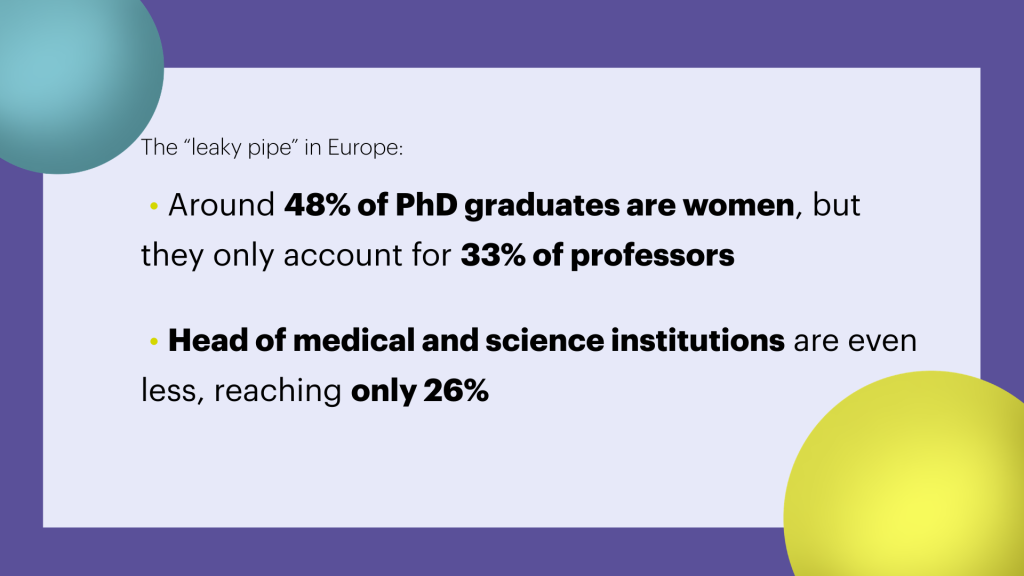
In Europe, around 48% of PhD graduates are women, but they only account for 33% of professors. The proportion is even lower among heads of medical and scientific institutions, at 26%.
These figures contrast with overwhelming evidence that diversity is beneficial across organisations, helping to fuel creativity and innovation. UN Women’s “Unfinished Business” report summarises findings linking gender-diverse leadership with stronger business outcomes, including profitability and innovation, while the International Labour Organization (ILO) also discusses gender diversity in company boards and its links to business outcomes.
When the caring burden falls disproportionately on women
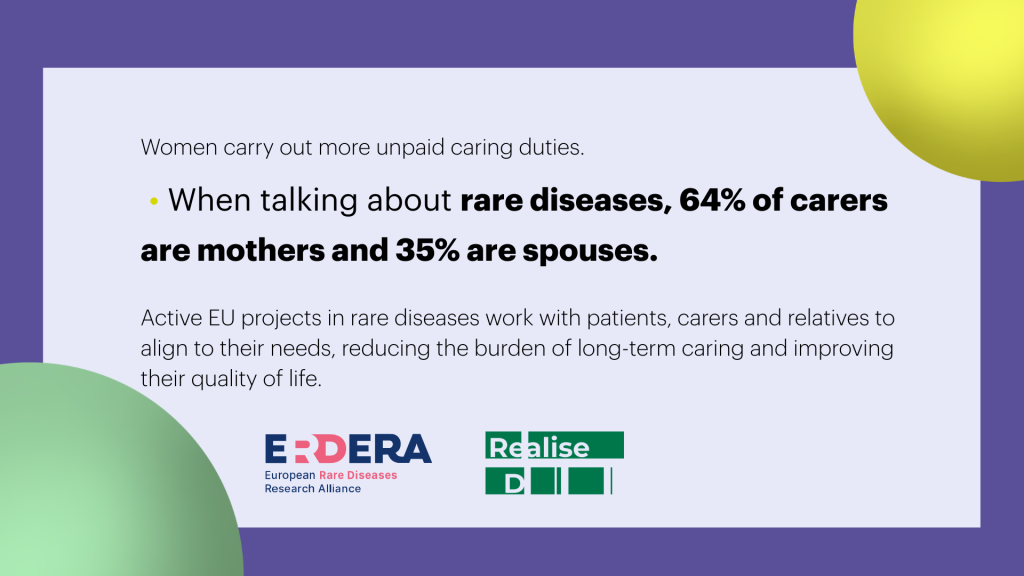
One reason women may enter the workforce in lower numbers —or step back from it—is that they carry out more unpaid caring duties.
For example, in the context of rare diseases, the care burden is often assumed by women: 64% of carers are mothers and 35% are spouses. Active European projects in rare diseases, including ERDERA and RealiseD in which Teamit plays an active role, work not only with researchers and healthcare professionals, but also with patients, carers and relatives to align research to their needs— reducing the burden of long-term caring responsibilities and improving quality of life for those with rare diseases and their families.
The evidence gap: women still missing from clinical research
In terms of diagnosis, women are usually diagnosed later than men —even where symptoms begin earlier—a pattern discussed in the literature on sex and gender gaps in medical research.
In development and testing of new potential treatments, the gender gap is also engraved in standard practice: Clinical studies have been mainly carried out in men and therapies have been designed, by default, for the male body. While the situation is improving, gaps remain. For example, a 2017 US Food and Drug Administration (FDA) report stated that women represent 43% of clinical trial participants globally, and highlighted continued under-representation in early-phase research.
This combination of factors results in women starting treatment much later, when disease has developed further, presenting substantial risks for their wellbeing and quality of life.
In rare diseases, where the population for clinical studies is limited and scattered geographically, the lack of a more balanced representation could hinder female patient’s access to appropriate treatments, magnifying the negative outcomes of the already systemic discrimination they often face.
Investing in equality
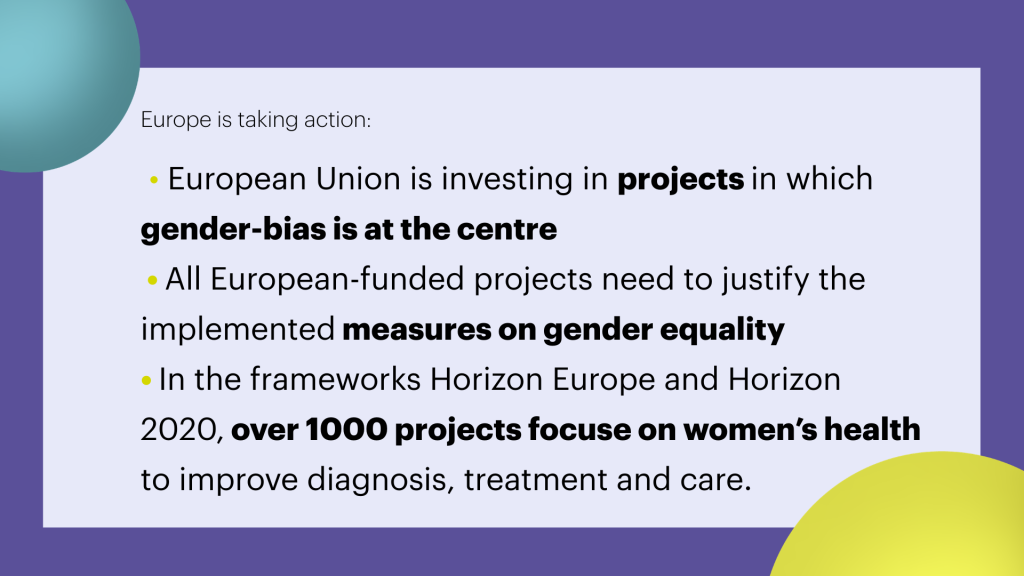
To break this pattern and strive for a gender-equal society, the European Union is investing in projects in which gender-bias is at the centre.
Independently of the innovation area, all European-funded projects need to justify the measures they have implemented on gender equality. Moreover, the EU is determined to make a difference in women’s health. Under Horizon Europe and Horizon 2020, over 1 000 projects focused on women’s health were funded with a total budget of over €2 billion to improve diagnosis, treatment and care.
Teamit works on projects that aim to improve healthcare while keeping equity in research in view. That means paying attention not only to scientific progress, but also to who benefits from it, and how evidence is generated in the first place.